

2026 Modern Bathroom LVP Flooring Designs for the Bay Area
In the Bay Area, our bathrooms have evolved from purely functional spaces into private retreats. Whether you are looking out over the hills in San Rafael or living in a sleek high-rise in San Jose, the modern bathroom demands materials that are as beautiful as they are resilient.
Enter Luxury Vinyl Plank (LVP). While traditionalists once reached for stone or ceramic tile, LVP has become the “go-to” choice for modern bathroom renovations across Northern California.
At The Floor Store, with our 10 convenient locations, we’ve seen a massive shift toward this waterproof wonder. Here is why LVP is the ultimate modern bathroom solution and how to design with it.
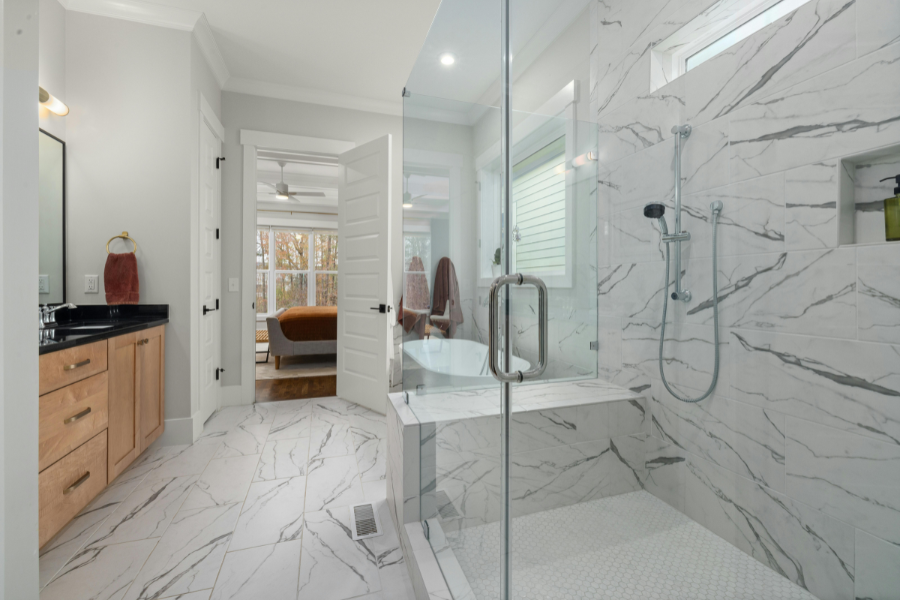
Table of Contents
- The Waterproof Luxury Vinyl Plank Revolution
- Trending LVP Bathroom Designs of 2026
- The “Scandi-Spa” (Light Oaks)
- The “Industrial Slate” Look
- The Herringbone Statement
- Why Bay Area Homeowners Love Luxury Vinyl Plank Flooring for Their Bathrooms
- Modern LVP is Designed for Longevity, Perfect for a Master or Guest Bathroom
- Visit The Floor Store for Your 2026 Bathroom Remodeling Project
The Waterproof Luxury Vinyl Plank Revolution
The primary concern in any bathroom is moisture. Historically, this meant your design options were limited to cold, hard tile.
Modern LVP changed the game. Because it is 100% waterproof, you can now bring the “warm wood look” into the bathroom without the fear of warping, cupping, or water damage.
For a contemporary Bay Area home, this means you can create a seamless flow from your master bedroom directly into the en suite, using the same flooring for a clean, uninterrupted visual.
Trending LVP Bathroom Designs of 2026
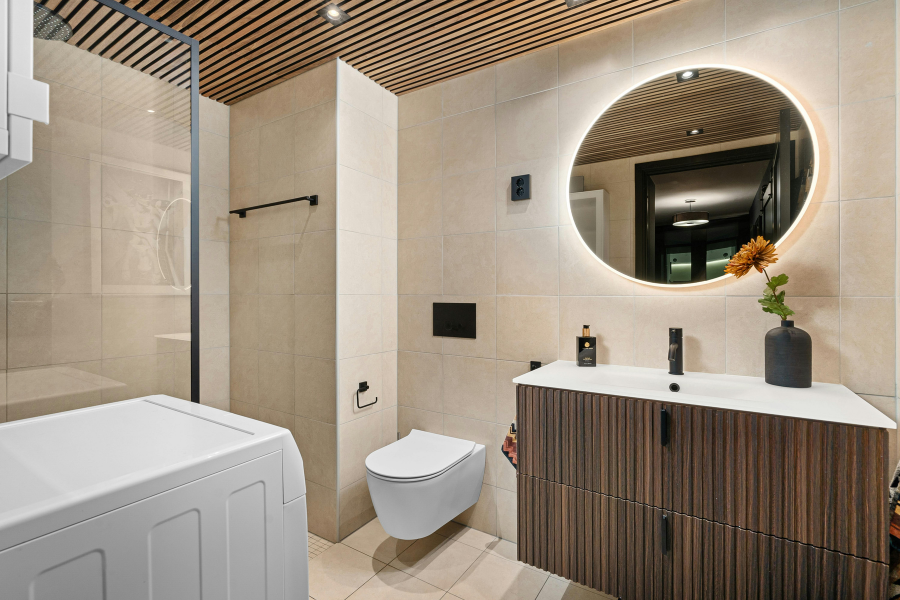
The “Scandi-Spa” (Light Oaks)
One of the biggest trends in Sunnyvale and San Carlos right now is the “Scandi-Spa” look. This involves pairing light, sandy-toned LVP—like white oak or bleached maple—with minimalist white cabinetry and matte black fixtures.
The light floor makes even small San Francisco bathrooms feel airy and expansive.
The “Industrial Slate” Look
Not all LVP looks like wood. Modern technology allows for high-definition “stone-look” LVP.
In contemporary Concord or Dublin homes, we are seeing a rise in large-format, charcoal-grey LVP that mimics the look of slate or honed concrete. It offers the edgy, industrial aesthetic but feels much warmer and softer underfoot than real stone.
The Herringbone Statement
If you want your bathroom to feel like a high-end boutique hotel, consider a herringbone installation.
Many modern LVP collections now come in smaller planks specifically designed for patterned layouts. A herringbone floor in a soft grey or natural oak adds an architectural “wow factor” to the room.
Why Bay Area Homeowners Love Luxury Vinyl Plank Flooring for Their Bathrooms
While we love a beautiful tile or even hardwood floor at The Floor Store, LVP offers several distinct advantages for the modern homeowner:
- Slip Resistance: Many modern LVP products feature a “wear layer” with advanced texturing. Unlike polished marble or porcelain, which can be treacherous when wet, textured LVP provides much-needed grip.
- Warmth Underfoot: Early mornings in Santa Rosa or San Francisco can be chilly. Tile retains cold, whereas LVP stays closer to room temperature. It’s a much friendlier surface for bare feet.
- Ease of Maintenance: No more scrubbing grout lines! Because LVP planks click together or are glued down with tight seams, there is no porous grout to trap mold or mildew. A simple damp mop is all you need.
Modern LVP is Designed for Longevity, Perfect for a Master or Guest Bathroom
When selecting LVP for your bathroom, the “Wear Layer” is key. At The Floor Store, we recommend a wear layer of at least 20 mil for bathrooms.
This ensures your floor can handle the humidity, cleaning products, and foot traffic of a busy household for decades to come.
Additionally, consider the “Rigid Core” (SPC) options. Stone Plastic Composite (SPC) cores are incredibly dense and stable, making them less likely to expand or contract during those humid Bay Area winter months.
Visit The Floor Store for Your 2026 Bathroom Remodeling Project
With 10 showrooms throughout the Bay Area—including San Francisco, San Jose, Dublin, and Santa Rosa—we pride ourselves on having the most diverse selection of LVP in Northern California. Our team is knowledgeable about our products and will help you find the perfect match for your style, lifestyle, and budget.
We don’t just sell flooring; we help you design a space. We invite you to bring in your cabinet swatches and countertop samples (or browse our own countertop selections!) to see how they coordinate with our latest LVP arrivals.
Our Locations
- Richmond / Albany, CA
- Burlingame, CA – Outlet Now Open
- Concord, CA
- The Flooring Store in Dublin, CA
- Fairfield, CA
- San Carlos, CA
- San Francisco, CA
- San Jose, CA
- San Rafael, CA
- Santa Rosa, CA
- Sunnyvale, CA
Bathroom LVP Frequently Asked Questions
Can I install LVP in a shower?
A: LVP is great for bathroom floors, but it is not designed for shower walls or floors. For the shower itself, you’ll want to stick to traditional tile or stone. However, matching your floor LVP to a similar-toned tile in the shower can create a beautiful, cohesive look.
Does LVP need an underlayment in the bathroom?
A: Most high-quality LVP comes with a pre-attached underlayment (often cork or foam). In a bathroom, this provides extra comfort and sound dampening. If your subfloor is uneven, our team at The Floor Store can recommend additional leveling solutions to ensure a perfect fit.
Is LVP okay with radiant heating?
A: Yes! Many modern LVP products are compatible with radiant floor heating systems. This is a popular luxury addition for many homes in the cooler parts of the Bay Area, like San Rafael or Albany. Always check the specific manufacturer’s guidelines, which our staff can help you with.
How do I prevent water from getting under the planks?
A: When installing LVP in a bathroom, we recommend a small bead of silicone caulk around the perimeter (near the tub and toilet) before you install your baseboards. This provides an extra “seal” to keep moisture from sneaking under the floor.