


Sonic Sanctuary: The Best Flooring for Music Lovers in San Francisco
San Francisco is a city with a deep-seated soul for music—from the legendary jazz clubs of Fillmore Street to the high-fidelity listening rooms tucked away in Sea Cliff and Noe Valley. For the true audiophile, a home isn’t just a living space; it’s an acoustic environment.
When you’re setting up a world-class sound system or a private rehearsal space, most people focus on speakers and amplifiers. However, at The Floor Store, we know that the most important “component” in your audio chain is the room itself. In a city of historic Victorians with high ceilings and modern glass condos with hard surfaces, managing acoustics is essential.
As your Bay Area flooring specialists with a convenient showroom in San Francisco and nine others across Northern California, here is our guide to the best flooring for top-tier acoustics.
Table of Contents
- The Physics of Sound and Flooring
- 3 Top Flooring Options for Optimal Acoustics
- The Gold Standard: Luxury Cork Flooring
- Hardwood with the Right Underlayment
- Designer Carpet and Custom Area Rugs
- Solutions for the San Francisco Living
- Flooring for Audiophiles Frequently Asked Questions
The Physics of Sound and Flooring
In acoustic design, you are balancing two forces: absorption and reflection.
- Hard surfaces (like tile or polished concrete) reflect sound waves, creating “flutter echoes” and a harsh, bright sound that can make music feel fatiguing.
- Soft surfaces absorb sound, preventing reverberation but sometimes making a room feel “dead” if overused.
The goal for a music lover in San Francisco is to find a floor that offers “warmth”—both tonally and aesthetically.
3 Top Flooring Options for Optimal Acoustics
1. The Gold Standard: Luxury Cork Flooring
If you were to design a room specifically for sound, Cork would be at the top of your list. Cork is naturally composed of millions of honeycomb-like air cells, making it one of the best natural sound absorbers on the planet.
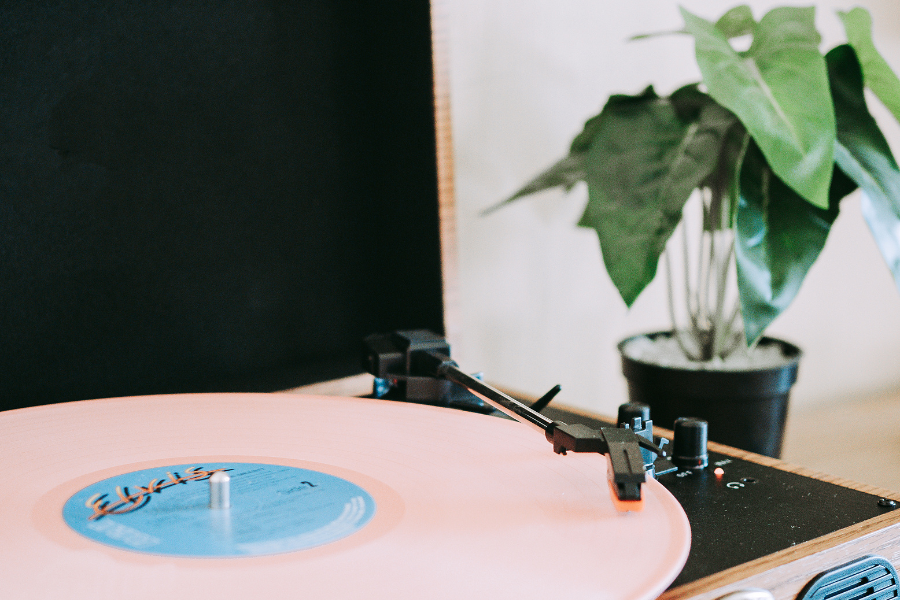
- The Acoustic Benefit: Cork naturally dampens “impact noise” (footsteps) and “airborne noise” (music). It reduces the vibration that can interfere with sensitive turntable needles.
- The San Francisco Vibe: Cork is a sustainable, organic material that fits perfectly with the eco-conscious values of the Bay Area. Modern cork comes in stunning planks that mimic hardwood or stone, fitting seamlessly into a contemporary SF interior.
2. Hardwood with the Right Underlayment
Most San Franciscans love the timeless look of hardwood. While wood is a reflective surface, it provides a “warm” reflection compared to the “cold” reflection of stone or tile.
- The Secret is Underneath: To make hardwood work for a music room, the underlayment is everything. At The Floor Store, we provide high-performance acoustic underlayments (like rubber or high-density foam) that decouple the floor from the subfloor. This prevents bass frequencies from traveling through the structure of the house—a must-have for those living in multi-unit buildings or San Francisco flats.
- Species Matters: Softer hardwoods like Walnut or Cherry tend to have slightly better acoustic properties than extremely hard exotic woods.
3. Designer Carpet and Custom Area Rugs
For the ultimate “listening chair” experience, carpet is unbeatable. It eliminates floor-to-ceiling parallel reflections, which are the primary cause of acoustic distortion.
- Wall-to-Wall Luxury: A high-pile or “frieze” carpet provides maximum sound absorption. If you have a dedicated media room in a home in St. Francis Wood, a plush carpet will make the audio feel intimate and clear.
- The “Rug Layer” Strategy: If you prefer hardwood, you must use a heavy, high-quality area rug. We recommend a “layered” approach: a thick wool rug placed between your speakers and your seating position to catch the “first reflection” of the sound waves.
Solutions for the San Francisco Living
San Francisco homes often present unique challenges. Many older homes have uneven subfloors, and modern high-rises have strict IIC (Impact Insulation Class) ratings to keep noise from bothering neighbors.
At our San Francisco showroom and our 10 locations across the Bay Area, we specialize in identifying the right flooring and underlayment combinations to meet these strict acoustic codes while still matching your personal style and budget. Whether you are building a professional recording studio or just want your vinyl collection to sound its best, we have the expertise to help.
Our Locations
- Richmond / Albany, CA
- Burlingame, CA – Outlet Now Open
- Concord, CA
- The Flooring Store in Dublin, CA
- Fairfield, CA
- San Carlos, CA
- San Francisco, CA
- San Jose, CA
- San Rafael, CA
- Santa Rosa, CA
- Sunnyvale, CA
Flooring for Audiophiles Frequently Asked Questions
Which is better for sound: LVP or Hardwood?
While both are hard surfaces, Hardwood generally has a more natural resonance. However, high-end Luxury Vinyl Plank (LVP) with a thick, pre-attached acoustic cork or foam backing can actually outperform hardwood in reducing foot traffic noise and vibrations.
How do I stop my bass from vibrating the floor?
The best way to stop “bass bleed” is through mass and decoupling. Using a heavy flooring material (like thick engineered hardwood) over a specialized acoustic rubber underlayment will help “trap” the low-end frequencies before they enter the floor joists.