

Why is My Luxury Vinyl Plank Flooring Lifting? How Do I Fix It?
Luxury Vinyl Plank (LVP) flooring is a homeowner favorite because it is durable, waterproof, and famously easy to install.
However, like any floor, it is not immune to installation or environmental issues. One of the most common and frustrating problems is finding a section of your luxury vinyl plank flooring lifting—a frustrating sight that disrupts the smooth, seamless look you paid for.
The good news is that lifting or buckling planks are usually correctable. Understanding the root cause is the critical first step to getting your beautiful, flat floor back.
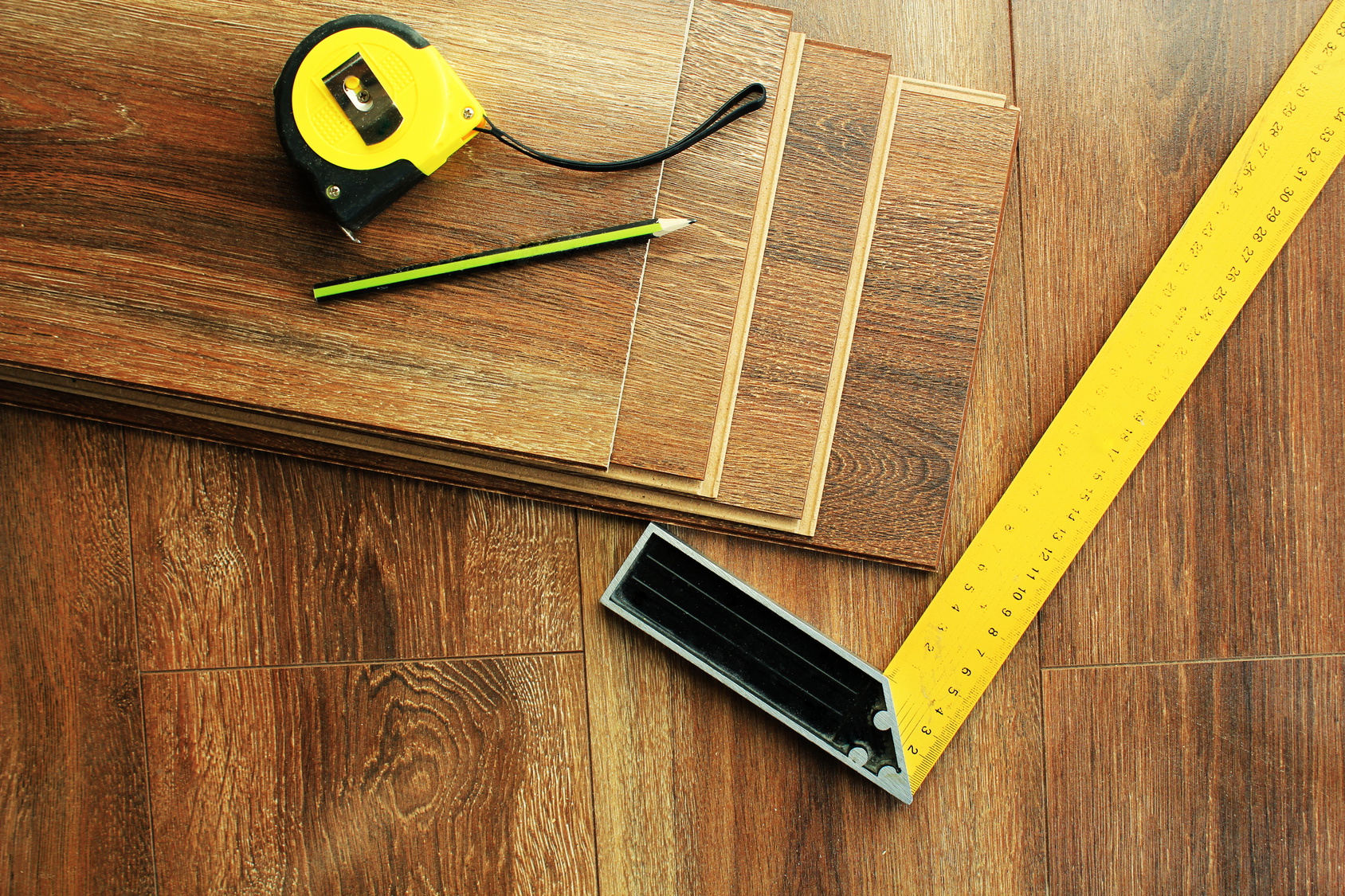
3 Main Reasons Why Your LVP My Be Lifting
Lifting or buckling in LVP (especially floating floors, which use a click-lock system) can almost always be traced back to one of three issues: installation errors, expansion/contraction, or subfloor problems.
#1: Lack of an Expansion Gap (The Most Common Issue)
LVP, despite being synthetic, will expand and contract slightly with temperature changes.
A floating floor requires a small, deliberate gap (typically $1/4$ inch) around its perimeter—at the walls, cabinets, and other vertical obstacles.
- The Problem: If the planks are installed too tightly against a wall or cabinet, the floor has nowhere to expand during warmer months. When it tries to push out, it hits the obstruction, and the only place it can go is up, resulting in a buckle or lift in the center of the room.
- The Fix: This is a surprisingly easy fix. Use a pry bar and a utility knife to carefully remove the baseboards or shoe molding. Locate the planks that are pressing too tightly against the wall. Using a utility knife, trim a small amount (about $1/4$ inch) from the edge of the plank that is hidden under the baseboard. Reinstall the molding. The floor now has room to expand and should flatten out within a few days.
#2. Subfloor Irregularities
LVP requires a flat subfloor. While it can handle minor imperfections, major dips, humps, or old flooring that was not fully removed can compromise the click-lock system.
- The Problem: If a plank is installed over a significant dip, it can stress the click-lock joints, causing them to disengage and the planks to lift. Similarly, a high spot can put pressure on the joints, leading to a visible gap or buckle.
- The Fix: This is a more involved repair. You must carefully uninstall the planks leading up to the problem area. Once the area is exposed, apply a leveling compound (for dips) or sand down (for humps) until the subfloor is flat and smooth. Once cured, you can reinstall the LVP.
#3. Excessive Moisture (for Glue-Down or Older LVP)
While modern LVP is highly water-resistant, if the product is an older, glue-down type, or if water repeatedly seeps underneath a floating floor, it can cause problems.
- The Problem: The adhesive on glue-down flooring can lose its grip, or a severe leak can cause the subfloor underneath to swell, pushing the LVP upward.
- The Fix: For a small, localized lift in a glue-down floor, a specialty adhesive can be injected under the plank. For a severe leak that has damaged the subfloor, the affected area must be removed, the subfloor repaired, and new LVP planks installed. This highlights the importance of using fully waterproof LVP in areas like the kitchen and bathroom.
The Floor Store is Your Peace of Mind
Fixing a lifting plank is much easier when you’ve chosen a quality product and a professional installation team. When you shop with us, you are guaranteed top-tier products designed with robust click-lock systems that resist lifting.
If you are currently experiencing this issue and are not sure if it’s an expansion gap problem or a subfloor issue, our team can help you diagnose and plan the repair.
You can even use the ease of shop-at-home to consult with one of our Bay Area flooring experts, who can guide you on the repair process or help you select a superior, new generation LVP if your current floor is at the end of its lifespan.
Contact One of Our Flooring Stores Today!
Don’t let a lifting plank ruin the look of your home! Call or visit one of our 10+ convenient showrooms across the Bay Area and Northern California, including locations in San Francisco, San Jose, Dublin, and Fairfield.
We are committed to helping you find the best flooring solutions, whether it’s troubleshooting an existing floor or selecting a new one.